God's always "hooking us," pulling us back: back to the Word, back to the Meal, back to the Font...back to the community.

This blog is for the purpose of sharing around each Sunday's Bible readings & sermon at Shepherd of the Valley Lutheran Church.

Get Sunday's readings here. We follow the Narrative Lectionary.
(In the summer, we return to the Revised Common Lectionary' epistle or Second Reading here.)

So, what's been hooking you?

So, what's been hooking you?


Here you can...

Sunday, February 15, 2015

February 15 -- Transfiguration Sunday


Have you ever had a “transfigurational” experience?  A mountain top experience:  ecstatic (out of body, in a way).  Heaven and earth come together.  Christ’s face shining.  God’s love all around.  All is good.  And you want to hold on to that moment forever?  

I had one of my life’s “transfigurational” experiences in the presence of some of you...a little over two years ago, now, in Germany.  

We took a congregational trip -- something like 20 of us -- to the lands of Luther.  And we had been traveling together for a handful of days coming up from the south of Germany where we started, winding our way through the sites of Luther’s life, his birthplace of Eiselben, where you can stand in the church where he was baptized, the castle where he was hidden outside of Erfurt, Leipzig famous for Bach, the great Lutheran composer -- and finally we arrived in Wittenberg, where Martin Luther and his wife Käthe spent their life together, where Luther did most of his teaching and preaching -- and where, of course, he nailed the 95 theses to the church door.

It was at that church where we got to worship on a Sunday morning in October!  We were in Wittenberg on a Sunday morning!  And in many ways, aside from the extravagant architecture and opulent interiors, it was much like worshiping here on Sunday morning: The prayers and the readings were the same, the preacher stood up in the pulpit to preach, the music was familiar, the offering plate got passed just like we do, and then comes time for communion as the congregation sings together.


And that’s where I lost it.  The way they did it was that you come forward in large groups and circle in the front chancel area, as the pastor goes from person to person administering the body of Christ and the blood of Christ.  It’s while I was standing there.  Light streaming into the sanctuary, God’s people gathered and these statues of Martin Luther and Philip Melanchthon elevated on either side of the front space.  Instead of Elijah and Moses, it was Melanchthon and Luther, not replacing the presence and the glory of Christ, but enhancing it, joining me in giving praise to God.  Art and stories in Germany abound of Luther always “pointing to” the crucified Christ, never standing in the center but always to the side.  

I’m not a big statue guy, especially statues in churches.  But those those guys are are buried in that sanctuary, Luther under the pulpit.  So it was like they were present in an additional way.  And it hasn’t occurred to me until this week, that it was a “transfigurational” experience.  When you’re in the moment, you’re not intellectualizing -- [scholarly voice] “I am now having a transfigurational experience” -- no, you’re just letting it wash over you.  The ornate sanctuary, the harvest display of fruits and vegetables at the foot of the alter (a sign of the living church, not just a historic site), yet so rich with history: I could see the inside of the door where Luther nailed the 95 theses, I could see his tombstone under the pulpit and there was a ray of light shining in on his stature in that beautiful chancel that was commingled with rich shadows and glorious sunlight, which was a gift on an overcast October Northern-hemisphere day.  I felt the tears stream down my cheeks, I tried to sing but gave up and just listened, I looked at some of you across from me, Heather right next to me--an even better sign of God’s living church--some of you were getting a little choked up too, I noticed.  I went back to my pew literally weak in the knees from trying to stand there up in front, through it all.   

It was truly transfigurational for me -- heaven and earth come together, a sense of clarity, and peace, and beauty, and hope and joy.  

And here’s what I’m noticing about Transfiguration this year -- It’s about our past as well as our present and our future.

When the disciples looked at Jesus on the mountain top, they saw Jesus...with Moses and Elijah.  When we look at Christ, in “transfigurational” moments we see our past as well as our present and our future all wrapped up at once.  
For me, that’s the Lutheran line.  Luther and Melanchthon, you who are older than me, you who are younger than me -- we’re all wrapped up into one at the foot of Christ’s cross. 

Our history has so much to do with our present.  Where we’ve come from.  Both as individuals and families...and as the church.  How many shoulders are we standing on here?  

Who is it that’s shaped you for better or worse?  [pause]

Dreamed about having events this year, to talk about controversial issues like immigration or gun control -- but talk about that not as why I’m right and your wrong, but rather to reflect on the shoulders I stand on in forming my position on [pick your] issue.

Our history matters deeply.  So often fathers aren’t the most loving, care-givers.  Do you know why?  Perhaps they never learned.  “If you parents didn’t love you the way you think they should have, it’s because they never learned.”  

We stand on the shoulders of our past, of our parents and grandparents, most immediately, but that legacy goes even further back, especially in the church.  

Why do we say “The Lord be with you.  And also with you.”  Why do hold out our hands to receive communion.  Why do we start at the baptismal font, or reach out and touch the Holy Book before the Gospel reading?

It’s because that’s what’s been passed down to us.  

When the disciples on the mount of transfiguration looked at Jesus that day, they saw their past before them too, along with their present and even their future...just for a moment.  I think that’s what happened to me in Wittenburg...just for a moment.   

We don’t always remember or recognize the shoulders upon which that we stand.  From time to time we make a point to honor our forebearers.  Our nation helps us with this -- stopping for a whole day to honor our presidents, or great national heroes, explorers, soldiers, veterans and great patriots.  

But how about in the church and in our homes?  How often do we stop and consider those shoulders that we stand on?  And not just the obvious one -- like Luther, Melanchthon, Moses, Elijah, your mom and dad.  But also the legions of no-name or rarely-named saints who make up our existence and give us some grounding in the family of God.

The past is critical in the story of the Transfiguration -- Elijah and Moses were standing there.  Two great patriarchs of the Jewish faith to remind those disciples of all the great patriarchs and matriarchs of the faith.  

As we give glory to God this day, as we bear witness to Christ’s shine, let us do so in the company of the saints -- saints who are still with us (think of your teachers and our children’s teachers) and saints who have gone before us.  Give thanks for the saints whose witness has paved the way for us to be a living church today, not just a relic of the past.  

And together we give thanks to Christ who calls us now down from the mountaintop, who bids we take up the cross and follow him.  Those who we honor are those who have suffered for their faith.  We will suffer too, for that’s what it looks like to shine with Christ, he teaches us.  Let us go boldly and in the sure confidence that even as we suffer down this bumpy road of discipleship, even as we descend the mountain, come back to our pew or com home from Wittenberg, we don’t go alone:  Christ Jesus goes with us, and holds us together.  Thanks be to God.  AMEN

Sunday, February 8, 2015

February 8 -- Feeding 5000+


Sisters and brother in Christ there are 3 points I’d like to make today, in light of this Gospel text:
And keep in mind what has happened here and what will happen.  So much violence and chaos in the story so far and to come -- Herod’s evil rule, Roman empire has asserted its dominance.  And we know that the empire will catch up to Jesus in the end of the book, but here we’re getting glimpses God’s realm -- God’s will and rule on earth as in heaven.  These stories are glimpses of the narrow pathway of Jesus, to which we are invited to enter and follow. 
     1. Disciples wanted to disseminate the crowds, break them up, dismiss them.  But Jesus held them together.  
Disciples wanted to keep it simple and neat, but how “keeping it simple and neat” can breakdown community and attempt to edge out God’s compassion.  
This is a text about God’s compassion, God’s justice…where ALL are fed.  All are clothed, all are housed, all are safe.  
What does that mean for us and our world?  What would San Diego look like if everyone had “daily bread”?  And Luther describes daily bread in his small catechism as “Everything included in the necessities and nourishment for our bodies, such as food, drink, clothing, shoes, house, farm, fields, livestock, money, property, an upright spouse, upright children, upright members of the household, upright and faithful rulers, good government, good weather, peace, health, decency, honor, good friends, faithful neighbors, and the like.”
Jesus filled everyone’s bellies and prevented the disciples’ solution of breaking this problem of hunger down by simply dismissing the crowds.  Out of sight, out of mind.  Jesus says to us too: “You give them something to eat.”  
How might we as church work together toward ensuring everyone gets enough nourishment for their bodies, clothing, shoes, money, property, healthy families, good government, peace, decency, good friends, faithful neighbors and the like?    
The world is not ours to save.  That’s true.  But it’s ours to serve.  “You give them something to eat,” Jesus says to us.  Jesus holds us together.
     2. The disciples didn’t think there was enough.  But Jesus turned that which was offered into more than enough.
Five loaves and two fish, was hardly anything at first.  
Sisters and brothers in Christ, Jesus takes our “hardly anything” and works it for good.  We offer everything we have, and we offer it with thanks to God and let God take it from there.
This is not just a text about sharing.  I mean, there’s a great lesson here, if everyone shares what they have, it’s amazing how much food is left over.  We have that experience every time we have a potluck here at church.   There’s always a concern that we won’t have enough.  And there’s always leftovers when everyone brings a little something.  (Come to our Lenten suppers to see this again.)
Wonderful image, but this story is more than just an instruction to share, it’s God taking what we might deem as worthless, or too small or insignificant, and working wonders with it.  How has God used you, what you bring?  And by the way, the little boy was offering up everything he had -- even if it didn’t seem like much.  I don’t think he was packing more loaves and fishes in his cloak (do you?) and just sharing his leftovers.  He offered his all.  “Here’s all I’ve got, God. Use me.”  
Loaves and fishes stories are happening all around us, all the time!  We might not always acknowledge them as such, but they’re there!  I’m thinking about all the connections that we make.  Introductions, of people, that turn into great friendships or partnerships.  That’s how Agape house got started, T.A.C.O., Common Ground, Survivors of Torture International -- each of these organizations (think of the piles of “daily bread” they’ve provided over the years) -- began with some introductions.  “Well here, I know this person, let me introduce you to that person.”  God taking our “hardly anything” and turning it into a feast of good things for the good of so many.
     3. With the abundance, Jesus feeds us too! 
ALL ARE FED means you and me – we don’t just empty our pockets, empty our lives, and go home hungry and bitter.  In this amazing story, messy-spirit-filled-children-screaming-old-people-dancing-everyone-singing-everyone fed -- community-in-Christ is the result!  Amen?   ALL ARE FED, you and me included!
The disciples want to send them away, but Jesus even feeds the disciples.  Jesus forms us all into one body, through shared food and shared space.  The disciples don’t think there’s enough, but Jesus makes sure everyone is feed, including them, including us!
We are fed this day—tired, depressed, lost, confused, lonely, wrapped up in conflict, stressed about money, grieving our losses, losing our hope—Jesus doesn’t send us away empty.  
He sends us away fed and with leftovers!  

Filled to the brim with grace and forgiveness.  Hope and joy that we can’t help but share.  Filled to brim with a new vision for living this life together, and a counter-vision for acting and speaking in an isolated and violent, violent world -- violence that has already come, violence that will come again.  Jesus’ followers: we stand for peace nevertheless.  We embrace the suffering, the hungry ones, the sick ones, the ones with out shoes, and the ones with troubled families, the ones who suffer from bad government, and poor leading, the ones whose neighbors are unfaithful -- those in our own communities and around the world, we feed them, because of the feast that Christ has laid before us.  We are filled to the brim with God’s compassion this day.  God’s life in Jesus Christ -- moving among us through the Holy Spirit -- in this bread and wine.  God is with us, renewing us, filling us.  Sustaining us, rescuing us from drowning.  God is with you.  And this strong Word will carry us through, for this day, it is enough for this day and forevermore...for we feast on the Bread of Life.  AMEN.  

Monday, February 2, 2015

February 1 -- Treasure in Heaven


Grace to you and peace from God...

It was a couple of weeks ago now that the front page of the Union Tribune featured a story about Tamika Brown, whose 19-year-old son Richi was stabbed in a park in the Kearny Mesa area and died a few days later in the hospital.  The suspect was apprehended and tried.  Ian Ellis, also 19, was sentenced to 21 years in prison.  Sadly, proceedings like this are nothing new -- nothing new to us as consumers of U.S. news, and certainly nothing new to our justice system.  Judges hear cases like this every day across our land.  Violence, greed, gangs, bullying, retaliation, guns, knives, anger, ignorance -- nothing new.  Same ol‘, same ol’.  It’s the way of our world.  These are our children and our communities.  And we’ve seen it before.

But here’s why this story made the front page:  The victim’s mother, Tamika Brown, in her statement after Ellis had received his sentence, Tamika Brown stood up and forgave her son’s murderer right there in the courtroom.  Now that’s new!  She stood up, with her prepared statement in hand, a statement much like you’d hear at any number of these types of tragic trials.  But then suddenly, the article said, something came over her, and she felt compelled to share a different statement, she looked right into the eyes of the teenager who had killed her son and told him that he is a child of God too, and that she had forgiven him.  “Only God knows why I’m not angry or why I don’t hate you,” she said.  “Would it shock you to hear that I love you?”  “Don’t lock him up,” she thought.  “Sentence him to my home.  Let him be my son...”  And then she sang a Gospel song to him: “He Cares”.

The judge reportedly got choked up, tears in his eyes, saying he’s never seen anything like this in all his time in the court system -- a mother singing to her son’s killer.
Tamika Brown is a Christian, regularly attending a church here in San Diego.  Her pastor said he was not surprised, having walked with her on that prayerful journey from anger to love.  

I bet she said the prayer Jesus taught us to say a time or two...  “Forgive us our sins as we forgive those who sin against us.  And lead us not into temptation, but deliver us from evil.”  

When I think about ‘evil’ in this story, I think about Tamika’s son’s killer and the evil crime he committed...but I also think about the evil that comes from holding onto the anger.  Who knows what she might have done?  Family members visited Tamika, friends and cousins too, and so many of them, she tells, had just one thing on their mind: revenge.  “Who did this?  We’re gonna get him back!”  “That’s not what I want,” she told them.

What was it that came over her in that courtroom?  Maybe I should have waited until Pentecost to talk about this story, because this is a Holy Spirit story.  And the Holy Spirit, sisters and brothers in Christ, on account of Christ, in and through Christ, because of Christ, the Holy Spirit gives us all strength to do and say forgiveness-things that we didn’t think we ever could.

That’s what’s at the heart of this prayer that Jesus teaches his disciples, this prayer that we say every Sunday, the prayer that your church council has been concluding their meetings with since the beginnings of this congregation.  The prayer that has been passed down from generation to generation.  

When Jesus’ disciples ask him how to pray, he teaches them to pray -- not for everyone else -- but for themselves.  Pray for yourselves.  Pray for your hearts to be well.  Pray for the strength to forgive.  And God will help you from there.  

We start by just saying the prayer.  Even if you don’t believe in the prayer or in the power of the Holy Spirit.  Lots of people nowadays don’t participate with church because they don’t believe in this kind of stuff.  We’ve got brains, we’ve got compassion, we’ve got common sense -- who needs this archaic religion stuff, these rituals of holding hands and saying ancient prayers?  That’s a very real sentiment.  

But there is great power in gathering together to say this prayer.  As one of my worship professors used to say: “Private communion is an oxymoron.”  Do you notice its all in the plural: “Our father.  Forgive us our sins.  As we forgive.  Give us this day our daily bread.”  Martin Luther himself said -- when his dear, little daughter Magdalena died in his arms at age 13 -- Luther actually said that couldn’t believe in God, and that he needed the community’s faith around him to sustain him, to carry him through that terrible time.  He needed to join hands with others and say the Lord’s Prayer.  Your father is your father whether you reject him or not.  Your mother is your mother whether you believe in her or not, right?  God is never going to stop loving you, and calling you beloved.

But we are invited today, to glimpse God’s kingdom through the gift of forgiveness.  Not just God’s forgiveness, poured out for us...in this holy word and supper and font.  We are invited to taste heavenly treasure by forgiving others.  

Jesus talks about treasure in heaven today.  Someone was asking me what heaven is like the other day.  I don’t know, yet :) but I believe that heaven is place where our hearts are finally light and filled with joy and peace, where our souls are no longer divided -- sliced up by bitterness, resentment and anger.  Heaven where we’re whole and healed on the inside.

Forgiveness is such a hard thing -- and btw, forgiveness is much more than just saying, “Oh, that’s OK,” to someone who has really slapped you -- you know, someone who has really wronged you.  Turning the other cheek actually means standing up for yourself, not letting yourself be rolled over, beaten down, pushed around, or walked past.  Forgiveness is not a passive activity for the weak-hearted; it’s a bold and courageous -- and apparently original -- activity for the Spirit-filled.  

Tamika Brown, who stunned that courtroom -- in no way -- was telling Ian Ellis, “That’s OK that you killed my beloved.”  Her forgiveness was act of strength and, even more, of faith!  She gives us a glimpse of heavenly treasure, right here on earth.  Treasure in heaven, Jesus tells us, has got nothing to do with stuff; it’s got everything to do with heart, and community and faith.  She is boldly trusting in the support her community of faith and the Holy Spirit.  Those two are so deeply intertwined.

That’s what’s before us today, sisters and brothers in the faith.  We are called to forgive...and to work on that together.  Not just for the perpetrators sake (although what a gift to offer your forgiveness), but for our own sake.  For our anger will kill us...Even as live and breathe, and walk around through our lives.  The anger and bitterness and resentment will take us down.  

Jesus teaches us to pray for the courage of Tamika Brown.  As we once more say the same prayer we always say, eat the same meal that we always eat, share the same peace that we always share, sing the same songs as we always sing...it might seem that there’s nothing new -- perhaps to some.  

But we know that in this “same ol’, same ol’”, everything becomes new.  AMEN.

Sunday, January 25, 2015

January 25 -- The Beatitudes


Blessed are they who have lost something or someone.  

You know, if we’ve heard this passage many, many times -- as many of us have -- the gift of it is that we can hear different emphases each time, depending on where we are in our lives.  

I think, that in this, Jesus’ Inaugural Address (he’s only said about 5 one liners up to this point, but now he’s about to go on for 2 chapters).  A few short verses before this, and we see that he has indeed begun his ministry -- he’s called his disciples and he’s begun healing multitudes of people and casting out demons.  But now he stops that, climbs up a mountain side so that everyone can see and hear him, and he begins preaching.  And in this, Jesus’ State of the Union Address, he is drawing the whole community of disciples together through a common experience of loss, it seems to me.  Everyone has experienced grief and loss at some level.

Blessed are those who have lost something, those who mourn: he flat out says it too.

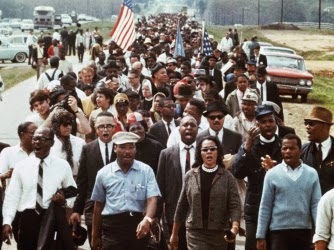
But those who are poor in spirit, they’ve lost something too.  They’ve lost hope, they’ve lost that spark, they’ve lost the twinkle in their eye and the pep in their step.  I saw ‘Selma’ this week on MLK Day in fact, and I was reminded again of the hundreds of thousands of African Americans who had been beaten down by racism for so long that that spirit -- if it’s not lost altogether -- is certainly
threatened and tested.  It would probably be easiest just to give up, don’t you think?  But through leaders like the great and famous Martin Luther King, Jr. and so many others, they clung to these words -- blessed are you.  And I know that King drew so much of his preaching and inspiration from this Sermon on the Mount.

(It’s amazing to pause for a moment and consider this sermon of Jesus inspired so many through the Civil Rights era, and many other critical moments in history, right up to today...)

Do you ever feel poor in spirit?   Are you ever feeling washed up and out of hope?  Jesus calls you blest, even in your state of loss and grief.  Blessed are those who have lost their spirit, their joy, their imagination and their dream.  Christ has a word for you!

Those who are meek, have lost something too.  They’ve lost power.  They’ve lost their place in line.  They’ve lost their seat and their say at the table.  Perhaps they never had it.  But they are blessed, according to Jesus.  Those who are at the margins have Christ at their side.  Those who are on the edge of poverty, living paycheck to paycheck, no time to even get their voice into the mix because they’re just trying to pay the rent, feed their kids, help them with homework, and then collapse to bed in order to do it all over again the next day.  Something has definitely been lost, and yet Christ calls them blessed.

And those who hunger and thirst for righteousness, those who are longing for the world and for themselves too to synch up words and actions.  That’s what righteousness is.  When you say one thing and do another your heart is divided.  But when you are righteous, when your words and actions line up and your heart is pure, God smiles and calls you blessed.  But those who hunger and long for this state of things are called “blessed” as well!  There is blessing simply in the “longing for”!  
If you simply desire and pray for the world and for yourself to be pure heart, righteous, peaceful, you are called “blessed” by Jesus!  
Let’s spend our time longing for peace, righteousness, mercy in our world and in our hearts! [pause]

The sermon goes on -- there are more who have experienced great loss -- those who are persecuted, those who are made fun of for their beliefs and their practices, those who go to church (like us), and those who don’t go to church -- those who are reviled.  The losses here are immense.  If you’ve ever been made fun of, you know the sense of loss that comes with it.  Youth are terrified of this and driven almost completely by it.  Rejection is an incredible loss.  We all want so badly to be accepted at some level, into some kind of community.  And there is deep, abiding pain, when we experience rejection, ridicule, peer pressure, bullying.

Well Jesus has a word -- and a community -- for those who get made fun of in the cafeteria line, in the locker room, on the bus, and into adulthood -- Jesus calls them blessed, even in the loss they’ve experienced.

This in itself is profound -- that God would name us blessed in those moments that the world only sees a loser.  [slowly] This in itself is enough to carry us through our darkest days.  This in itself is enough -- this strong word of God -- carried those marchers from Selma, Alabama to Montgomery.  Over the bridges of hatred and discrimination and violent abuse.  This strong word of God -- “You are mine; and you are blessed” -- is in itself enough to bring us through our troubled times.  

But I want to connect this word “blessed” back to the Old Testament:  You remember God’s promise to Abraham and Sarah?  “I will bless you to be a blessing.” Do you remember that?  
And we saw a few months ago, when we read this text, that blessing is not associated with the world’s view of success -- Abraham and Sarah, we learned were doing pretty well in the world’s eyes -- they had lands and cattle and employees and businesses.  But God didn’t name them as blessed until after they gave up their faith in all that, and went to a new land.  
Blessing doesn’t have to do with wealth and prestige, it has to do with being in a relationship -- a right relationship with God and a right relationship with the world.

So when Jesus calls us blessed, when we’re down and out, when we’ve lost, Jesus is inviting us to connect, to build community with those around us, who are hurting as well.  (I think this theme of community is so deeply imbedded in Matthew’s gospel.  What it means to be church.)

I heard a funny story again recently about this wacky “rabbi” living in Jerusalem who likes to have people over to his home and teach them, and who believes -- flat out  -- that he has all the answers to life’s problems.  One of his answers is this though -- “If you’re feeling sad and hopeless about your life, look around and find someone else who’s in a tough spot.  Help them out.  And I promise you, I promise you, I promise you, you’ll feel better.”  [pause and repeat (?)]

Blessed...to be a blessing.  Blessed are the poor in spirit...to be a blessing for others who are poor in spirit.  Blessed are those who hunger and thirst for righteousness...to be a blessing for others who hunger and thirst for righteousness.  [pause] We are lost looking at others who are lost.  Broken to be with others who are broken.  Hopeless but sitting right next to others who feel hopeless.  


In our wounded-ness we find healing, in our sorrow--when we look around and open our eyes and our ears--we find joy...through Jesus Christ, who invites all the downtrodden into lives of discipleship and service -- which is always wrapped up in community.  Blessed are those who mourn for they will be comforted.  Blessed are you when something that matters in your life is lost.  God is with you through it all, and not everything is lost...for in your darkest, saddest, most depressing moments, Christ is handing you the kingdom!  Christ is offering you the hope of the ages, the life of the universe, the joy of Lord.  You are blessed too.  AMEN.

Sunday, January 18, 2015

January 18 -- Tempted in the Wilderness


I’ve been working on projects this new year.  Been doing some painting, some repairs around the house, some art projects too -- a side of me that’s been neglected for a while.  And I’ve been organizing pictures -- almost 14 years of pictures -- about a 1000 pictures a year.  And so I’ve been reflecting back...

And one of my favorite series of pictures in our collection is our move to Chicago.  Heather and I had a comfortable life in Thousand Oaks.  We got our first apartment together right after we got married, we had comfortable life -- friends and family all very close by.  And then I decide God is calling me to go study theology, maybe even be a pastor.  And we spent 1 of those 2 comfortable years visiting schools and job options for Heather, and we finally decide on Chicago.  Which means we have to pack up all our things, and move to the Midwest.  I love our pictures of last suppers with different groups of friends.  Some of the church members where I had been working as a youth director showed up and helped us get everything into the truck (not quite sure what to make of all that now ;)  And then after all that time and preparation we drive the Uhaul truck, towing our only car literally across the country.  It was so exhilarating and frightening all at once.  Great pictures documented our journey.  And our first hurdle was to cross the desert in July.  I’d never driven a giant Uhaul truck at that point, never towed anything, and was so worried we’d get stranded in record heat.  But we made it.

Here’s what I want to say:  If you want to go to the fertile green, rolling hills of America’s bread basket, corn country -- Illinois, Iowa, Missouri, Nebraska -- you have to go through the desert.

Jesus had to go through the desert too.  This text comes to us this year, not at the beginning of Lent, like it normally does -- but this year we hear it in the order of the Gospel of Matthew.  We’ve just been working our way through, and right after Jesus’ baptism (last Sunday) it says, Jesus is led into the desert.  

Last week I talked about how Jesus gets down in the deep waters, the deep pain and sorrows, the deep humanity of our reality.  And this week that continues as he gets down into the deep temptations, tested...in the wilderness.  Last week Jesus is named the Son of God.  And this week, the devil -- Diabolos in the Greek, which literally means the Thrower of Obstacles or, I’d say, the Tripper -- the devil doesn’t miss a beat and says, OK, if you’re truly the “Son of God” then...

Last week was wet.  This week is dry.  Jesus goes through it all.

And Matthew, the Gospel writer, is centering his audience on this great theme of double-mindedness.  It’s pretty easy to fool everyone that you’re righteous -- that’s true for all of us.  For one thing, just get baptized right?  Do good things.  Be humble and kind with your words (and your Facebook posts).  Lead an upstanding life, be faithful to your spouse and your children.  Vote.  Go to church.  Pray at meals.  Support public television.  Adopt a family at Christmas.  And if any recognition or praise is ever passed your way, duck it, say something humble, and flip the praise onto someone else.  Classy.  We’re pretty good at fronting, showing the world how righteous we are.  (I think I do a pretty good job of it.)

But if we take the world’s eyes and commentary out of it.  If we strip away all those voices of praise and pressure, and just stand alone, then we’re forced to come face to face with the truth.  Then we come face to face with God.  You have to go through the desert.  There is a certain journey that followers of Jesus must take -- a certain winter wilderness that we must face.  Jesus took that journey to the wilderness.  He came out of those baptismal waters pretty glossy and clean.  Compare the artistic renditions of Jesus in his baptism vs. Jesus in the wilderness.  In his baptism he looks glossy and clean, as you’d expect.  And in the wilderness he’s tattered and famished.  

So it is with us -- if we choose to follow Jesus.  God’s going to love this broken world with or without our help.  God names us beloved too with or without our permission.  But now we are called to follow Jesus.  And Jesus is headed for the desert.  

We can look pretty glossy and clean on the outside -- and we should.  I’m not saying we need to wear it all on our sleeve.  But how’s it going on the inside?  Tattered and famished?  That’s how we come out of the desert.  Our clothes were sweaty and smell after our cross-country move.  If we strip the world away for a brief time and come face to face with God, we’d have to face some things about ourselves that maybe we’re not proud of -- some things that we can keep secret from our family and our friends, our communities and our church.  

We come face-to-face with God in the wilderness, and we also come face-to-face with the devil.  It’s always subtle.  Jesus wasn’t tempted with obviously evil and illicit things -- murder, adultery, stealing.  Jesus was tempted with 3 things that -- in themselves -- are not at all evil:  wealth, security and power.   

Wealth?  “Turn these stones into bread.”  You know how many stones are in the desert?  (This text had more meaning for me the first time I drove to Phoenix from here and saw all those stones as you descend into the wilderness towards El Centro.)  Jesus is being tempted to take way more for himself than he needs.  And we’re tempted by that all the time.  
Security.  Nothing wrong with that in itself.  But if it becomes a stumbling block to God’s mission which always involves risk-taking, then we get tripped.  “Protect yourself,” the tempter says.  “Nothing wrong with that.  C’mon, you’re not going to save the world.  You’ll always have the poor with you.  Live well, be merry.  Don’t expose yourself to all that pain...all that insecurity.  You’ve got angels -- you’ve got security nets.  Use them.”  This is one of the toughest for us, in our culture.  Where do you put your trust -- does your bank statement reflect that?  

And power.  Jesus‘ integrity is challenged.  “Sell your soul to me,” the devil says, “and you can have it all -- no one even has to know.”  

Even with all our technology, people alway feeling like they’re being watched -- which is another issue altogether.  But even with that, even if you feel like Big Brother is always peering down at you, there are still things that we can get away with...because no one but you can see what’s really inside.  

No one but you and God.  And God loves you no matter what.  

So I want to challenge you to go to some kind of wilderness this year.  Get some kind of silence, some kind of distance, where you can be alone with God.  And be prepared to be tested, tripped up.  Because God sees through all our fronts.  


And God loves us anyway.  And after enduring that hot tense desert experience we come out ready to love and serve.  The verdant pastures of ministry to our neighbors, the valleys and meandering streams -- I’m thinking of when our moving van coasted down into the lush corn fields of the Midwest -- this is the place to which our God has called us.  AMEN.

Monday, January 12, 2015

January 11 -- Jesus' Baptism


When I was in college there was this band from Los Angeles that I loved and saw a handful of times in concert.  They were called Ozomatli (named for the Aztec astrological symbol which is the god of dance, fire, the new harvest and music).  They are a 7-piece band, and the first time I saw them, I was amazed by their diversity: 2 African Americans, 3 Latinos, an Asian guy and a white guy.  Not a whole lot of bands like that.  (A picture of Los Angeles up on a stage.)  And their music reflects that diversity -- with a wide range of salsa, merengue, jazz, funk, rock, rap and hip-hop usually in various combinations within the same song.  They even have a track or two where a sitar can be heard!  And they’re fun!

(I used to imagine that God probably smiles down on this band, with all their cross-pollinating of sounds and rhythms...like when two people you always hoped would meet each other finally meet.  You sit back and say, “Ah, I’ve been waiting for you to get together! I knew you’d get along famously!”)

I actually saw Ozomatli for the first time on my 21st birthday.  And like you do, we had arrived to see the opening band.  Then there’s an intermission while everyone excitedly waits for the main act.  Suddenly the doors to the lobby, behind us, open up and I hear a faint chant and a bass drum beat.  Then I see these guys in a procession line, drums, maracas, no microphones, just making their way through the crowd as they chant a recognizable cheer that’s easy to join in with.  I’ve been to a lot of concerts, but I’d never seen a band come in through the same doors as we did, weaving their through the people, and then finally up onto the stage.  The concert had begun among us.  It built this momentum and excitement and energy, we felt part of the show.  They were high-fiving audience members, everyone’s joining into their signature chant...and I later learned that this is how they would start every concert -- down with the people.

While I don’t imagine Jesus’ entrance in our Gospel story and our lives as quite as raucous a scene, sisters and brothers in Christ, the concert has begun among us.  Jesus too gets down with the people; is baptized into our waters by John; enters our world the same way we do; but then blazes the trail of righteousness, leading us into the very realm of God -- inviting us to join in with him.  Join in with something exciting and new, something diverse and barrier-shattering, join the path of the righteous.  The inauguration of Jesus‘ earthly ministry begins here in Matthew’s Gospel, with his baptism in the Jordan river.  

Theologian and scholar Dale Bruner puts it like this:  “The first thing Jesus does for the human race is go down with it into the deep waters of repentance and baptism.”    

Jesus is the reason that our simple baptismal waters become holy and life-altering.  Jesus sanctifies our earthly waters.  Jesus is the reason that I can fill our font with faucet water, and yet proclaim from that place the entire forgiveness of all our sins.  And Jesus is the reason that when you get a few drops of baptismal water on you, you are reminded of God’s very claim on you and God’s new name for you too: Beloved.  “Delight of God’s life” -- is how our reading today translates that word “beloved”.  You are the “delight of God’s life”! 

I wanted to tell you the story of Ozomatli entering through the crowd, getting down with the people this morning, but I did think about doing a one-line sermon today.  I thought about what would be the impact if I got up here and just repeated for about 10 minutes.  Over and over the same line: “You are God’s beloved child.  You are God’s beloved child.”  Just to let that sink in.  Can you imagine?  Maybe you’d get annoyed with me if I did that?  Maybe you’d wonder why I hadn’t spent more time on my sermon...but it’s not about me.  Jesus‘ baptism is about you, and God’s claim on you through Jesus Christ.  And because of that you belong to God.  

And in these waters there is repentance and forgiveness.  John called for repentance...

This is the time of year for starting over -- the gyms are filled up, new healthier foods on our shelves at home.  And usually people are pretty cynical about their efforts.  “It won’t last,” they say.  But I don’t think there’s anything wrong with trying.  That’s what our confession and forgiveness is all about week after week.  God I’ve fallen short.  Help me to live better, help me to live to your glory, we say from the font each Sunday. 

Come with a repentant heart, John says.  Jesus invites.  Come confessing.  If we don’t confess our brokenness, the error of our ways -- and sometimes pride can lead us down that.  “I haven’t done anything wrong, or at least I’m not as bad as that other guy,” the Pharisees say.  “If we say we have no sin, we deceive ourselves and the truth is not in us, but if we we confess our sins, God who is faithful and just will forgive our sins” and put us on the track of righteousness.  God who is faithful and just will forgive our sins and join us to the band, to march, to the rhythm and the chant of the holy One, Jesus Christ -- who enters through the lobby (the same way we did).  Who moves among us, who sings with us and encourages us and invites us to join in.  Who forgives our sin, calls us a “delight”, and invites us to walk anew this day...this new year of life.  


The concert has begun among us.  AMEN.

Sunday, January 4, 2015

January 4 -- Second Sunday of Christmas


Sometimes there simply are no words.  

“A voice was heard in Ramah, wailing and loud lamentation, Rachel weeping for her children; she refused to be consoled.”

One terrible question here:  Why was one child saved and so many others had to die?  What kind of a God is this, that in only chapter 2 of this Gospel so much violence breaks out?  I mean we still have the Christmas tree up, for God’s sake!!

We’re going to sing a hymn in a little bit, which was written in 1970, by a contemporary of ours, which tries to give some theological meaning to what’s happening in this story.  I’m struggling with this text though, and a quick, sung response may not be adequate, even while there might be wisdom there.

I’m really going in a different direction here, because I’m thinking:  Sometimes there simply are no words.  Sometimes the tearful cry of Rachel is too loud to sing.  

I heard a story this week actually, of a family who lost a child all too soon to a sudden and tragic death.  And they talked about how after this had happened, after the funeral, and the loving parade of meals and shower of sympathy cards and hugs, when they went anywhere in their small, Midwestern town people would literally turn and walk the other direction.  

I imagine some of you have been on one or both sides of that experience.  What can possibly be said?  “It’ll be OK”?  Pointing out the silver lining -- these always come up short, and can even be hurtful, even while there not intended that way...

The father in this story, goes on to talk about one experience in particular, however, where they came around a corner, and one of their neighbors saw them and turned away as usual.  [pause] But then he describes how suddenly that neighbor stopped, dropped his shoulders and his head, and slowly turned back to them.  

“Uh, you probably saw me turning to walk away,” he said.  “Yes, we did,” said nodded the bereaved.  “I, I know.  I’m sorry.  It’s just that I...I don’t...I don’t know what to say.”  A long embrace and some more tears follows this dialogue. 

Sometimes there simply are no words.  

Just last week, I stood here and read Jesus’ final words in the Gospel of Matthew, “Lo, I am with you always, even to the end of the world.”  And here just verses later we see Jesus fleeing to Egypt, and Herod, hunting him down, decides he better play it safe and just murder every child in Bethlehem and the surrounding areas who were two years old or under.

It may be perhaps the most horrifying story in the Bible.  

Sometimes there simply are no words.

And yet this is a story with which we are all too familiar -- with tragedies of this caliber in our lives and in our world.  Children lost and even murdered, cries of mothers and fathers going up in the streets.  Herodian-style violence still today -- terrorism, school-mall-movie-theatre shootings...  

What happened to the Christmas carols and cozy, fireside gift exchanges?

I heard again this Christmas, somewhere--don’t even know where--that we need Christmas.  That there’s so much pain in our lives that we as Americans, we as humans, need the joy and the peace of Christmas -- the songs and the stories and the gifts and the family celebrations.  Almost like a drug that numbs the pain.  

But a drug wears off.  A Christmas buzz leaves us with a hangover.  I agree: we do need Christmas.  But it’s far more than a quick break.

That wonderful and famous story about the soldiers in Europe during World War II who stopped their fighting on Christmas Eve to sing Silent Night together in the trenches:  The thing is...they still went back to fighting.

The thing is...the Herods of this world -- the violence and the anger and the pride in this world -- still pounds on our doors and seems to prevail.

Sometimes there are no words.

But sisters and brothers, Jesus escapes the violence, the anger and the pride of this world.  And then, carried by his earthly mother and father, he returns.  That’s what Christmas is all about -- and this return doesn’t wear off.  Jesus returns to take on those forces of evil, and our suffering we see Christ’s suffering.  He returns to destroy those forces of evil -- both those forces of evil that we can see so plainly in our world and in the news headlines, and also those forces of evil that lay low, brooding in our own hearts and minds.  

Jesus escapes the violence, the anger and the pride of this world in a reverse-Exodus.  In the Old Testament the people, escape out of Egypt.  Here, Jesus escapes out of the the Promised Land.  This reversal is a signal to us that God is up to something unprecedented.  Holy reversals are taking place as Christ ushers in a new realm -- an immigrant family sneaking back across the border into Egypt and then back Israel [pic].  That’s the way this king comes.  These are the holy reversals.  Jesus names these reversals in a few chapters: “Blessed are -- not the rich -- but the poor.  Blessed are -- not the laughing and happy ones -- but those who mourn.  Blessed are -- not the powerful and the proud -- but the meek.  Blessed are -- not the fat and filled -- but those who hunger and thirst.”

Holy reversals are taking place in the midst of our silence.  Just as that sweet man who didn’t know what to say to the grieving family, turns around.  God turns around...and faces this world. And a long embrace (and maybe some more tears) follows.  

We receive that embrace, even today.  Even now...and for evermore.  All praise and glory to God, who in the end, never does leave us.  Jesus returns, thanks be to God.  AMEN.